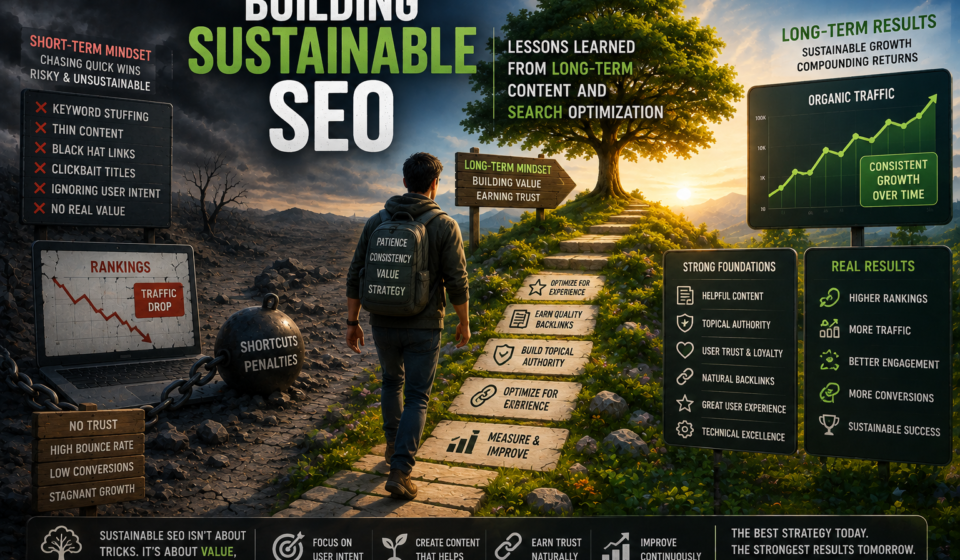
Building Sustainable SEO: Lessons Learned From Long-Term Content and Search Optimization

SEO can produce impressive results, but sustainable organic growth is rarely built through shortcuts. Search rankings change, competitors improve, user behavior evolves, and search technology continues to become more sophisticated.
After years of creating, optimizing, and maintaining websites, one lesson has become increasingly clear: sustainable SEO is less about chasing temporary ranking opportunities and more about building a website that remains useful over time.
Long-term success comes from consistent improvements rather than a single optimization campaign.
Sustainable SEO Starts With a Strong Foundation
Before focusing heavily on content, a website needs a reliable technical foundation.
A clean site structure, mobile-friendly design, sensible navigation, fast-loading pages, secure connections, and accessible content make it easier for visitors to use the website.
Technical SEO does not need to be unnecessarily complicated. The goal is to remove obstacles.
If important pages cannot be discovered, links are constantly broken, or visitors struggle to navigate the website, even excellent content may fail to reach its full potential.
A strong foundation allows future content and optimization efforts to work more effectively.
Build Around Topics, Not Just Keywords
One of the biggest changes in my approach to SEO was moving away from treating every keyword as a separate opportunity.
Instead, I started thinking in terms of topics.
A website can create a comprehensive main guide around a broad subject and then develop supporting articles covering specific questions and subtopics.
For example, a website focused on digital marketing might have a central guide to SEO supported by articles about technical SEO, keyword research, content strategy, internal linking, and search intent.
This creates a connected resource rather than a random collection of pages.
Create Content With Long-Term Value
Not every article needs to become a permanent traffic source, but sustainable websites benefit from content that remains useful.
Evergreen topics can continue attracting visitors long after publication.
Practical guides, educational resources, definitions, tutorials, checklists, and detailed explanations can have a long lifespan when they are maintained properly.
The key is to avoid creating content solely because a keyword appears attractive at the moment.
Ask whether the topic will still matter to your audience months or years from now.
Quality Should Come Before Publishing Frequency
Consistency is important, but consistency does not mean publishing as many articles as possible.
A sustainable publishing schedule is one that can actually be maintained.
Publishing three useful articles every month may be better than publishing twenty articles in one month and then disappearing for half a year.
A realistic schedule also creates enough time to research topics, edit content, improve existing pages, and analyze results.
SEO is a marathon, and a sustainable pace is often more effective than short bursts of activity.
Updating Content Is Part of Publishing
One of the most valuable lessons from long-term SEO is that publishing is not the end of the process.
Content needs maintenance.
An article may become outdated because statistics change, products evolve, regulations are updated, or new information becomes available.
Regular content reviews help identify pages that need attention.
Updates might include replacing old information, adding new examples, improving explanations, removing unnecessary sections, or strengthening internal links.
This approach can extend the useful life of existing content and reduce the need to constantly start from scratch.
Internal Linking Creates Content Relationships
As a website grows, internal links become increasingly important.
A well-planned internal linking structure helps visitors discover related resources and makes the website easier to navigate.
Instead of adding links randomly, think about the reader’s next question.
If someone is reading a beginner’s guide to SEO, they may want to learn about keyword research next. A relevant internal link can provide that information immediately.
This creates a natural journey through the website.
Measure Progress Over Time
Sustainable SEO requires realistic measurement.
Daily ranking changes can be interesting, but they do not always tell the full story.
Long-term trends are often more valuable. Monitor organic traffic, search impressions, clicks, engagement, conversions, and which topics consistently attract visitors.
The goal is to understand whether the website is becoming more useful and whether organic search is contributing to broader objectives.
Data should guide decisions, but it should not replace judgment.
Avoid Chasing Every SEO Trend
The SEO industry produces new theories and techniques constantly.
Some are useful. Others disappear quickly.
A sustainable strategy should not depend entirely on short-lived tactics.
Focus on principles that are likely to remain valuable: helpful information, clear structure, strong user experience, technical accessibility, relevant content, and honest communication.
Experimentation is healthy, but the foundation should remain stable.
Build Trust Through Consistency
Trust is not created by one article.
It develops when a website consistently provides accurate, useful, and understandable information.
Clear author information, transparent business details, reliable references where appropriate, easy navigation, and regularly maintained content can all contribute to a more trustworthy experience.
The more a website demonstrates that it cares about its audience, the stronger its long-term foundation becomes.
Final Thoughts
Building sustainable SEO requires a different mindset from chasing quick rankings.
Instead of asking, “What can I do to rank this page today?” ask, “How can I make this website more useful over the next several years?”
Create a strong technical foundation. Organize content around meaningful topics. Publish at a realistic pace. Update older resources. Connect related pages. Measure long-term trends and avoid becoming dependent on temporary tricks.
Search engines will continue to evolve, but the core objective remains remarkably stable: connect people with information that genuinely helps them.
Sustainable SEO is ultimately about building something valuable enough to keep earning attention long after the initial optimization work is finished.