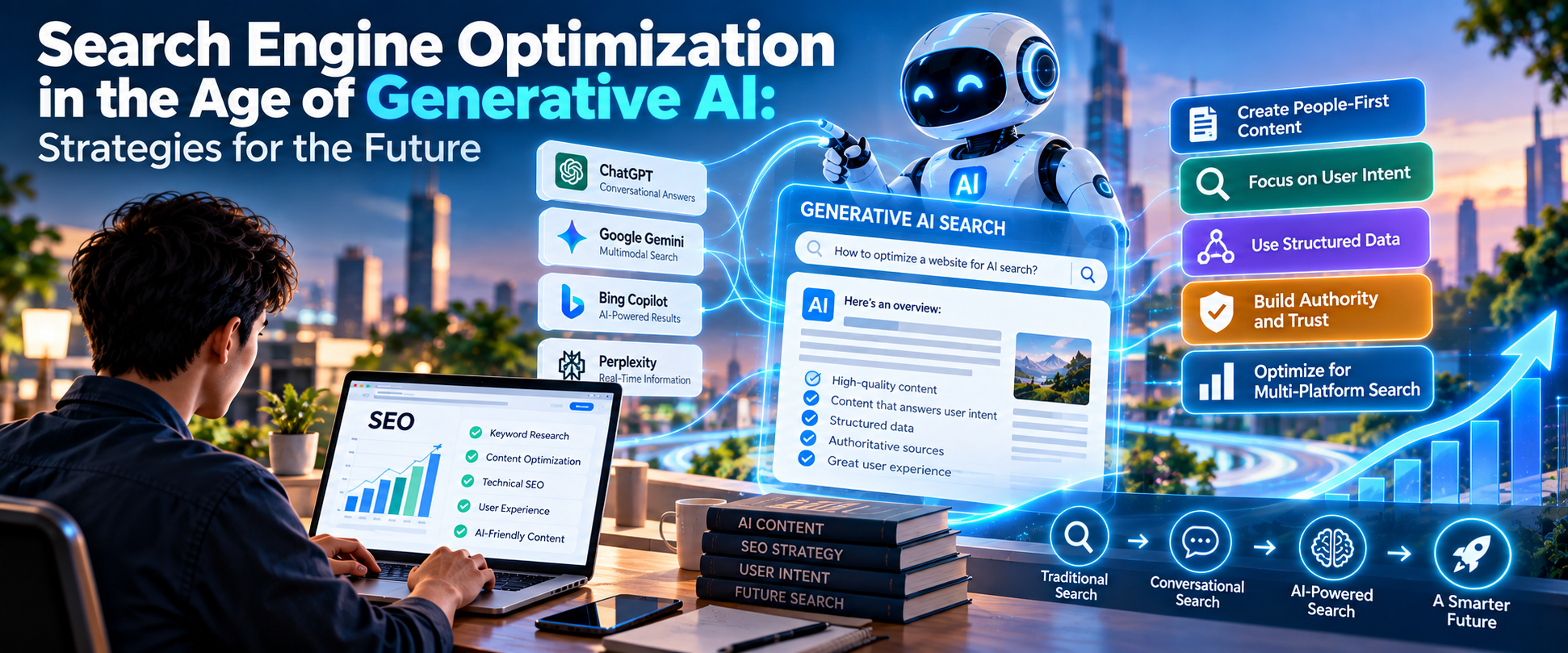
Generative artificial intelligence is changing how digital content is created and consumed.
Writers can use AI to brainstorm ideas, organize research, analyze information, and accelerate repetitive tasks. Search platforms can use similar technology to summarize content and answer user questions.
These changes have led some people to wonder whether SEO will remain relevant.
SEO is more likely to evolve than disappear. However, publishers may need strategies designed for an internet where producing generic content is easier than ever.
Generic Content Is Becoming a Commodity
Imagine that hundreds of websites publish articles titled “What Is Email Marketing?”
If most of those pages contain essentially the same definitions and recommendations, there is little reason for readers to prefer one over another.
Generative AI makes producing such content faster, potentially increasing the supply dramatically.
This makes differentiation increasingly important.
Publishers should ask:
What information does this article provide that readers cannot easily find elsewhere?
The answer could involve experience, original research, clearer explanations, better tools, or a unique perspective.
Use AI as a Tool, Not an Editorial Substitute
AI can improve publishing workflows.
It can help organize outlines, identify missing subtopics, summarize internal data, generate brainstorming ideas, and assist with editing.
However, publishers remain responsible for accuracy.
AI-generated material can contain mistakes, outdated information, unsupported claims, or invented details.
Human review becomes especially important for financial, medical, legal, technical, and other consequential topics.
Efficiency should not replace editorial standards.
Strengthen Topical Expertise
A website publishing unrelated articles about hundreds of subjects can struggle to develop a recognizable identity.
A more focused publication can explore a particular subject deeply.
For example, a website specializing in domains could cover registration, DNS, domain security, extensions, transfers, domain investing, branding, expiration, and related topics.
This creates a coherent information resource.
Topical depth also makes internal linking more natural because related pages genuinely support one another.
Create Primary Sources
One of the most valuable long-term content strategies is producing information other people want to reference.
Conduct an industry survey.
Analyze public data.
Interview professionals.
Test products.
Document an experiment.
Publish a case study.
When your website becomes the origin of useful information rather than another site summarizing it, the content becomes more difficult to replace.
Maintain Content Over Time
Publishing is not finished when an article goes live.
Information changes.
Software interfaces are redesigned, prices increase, regulations change, products disappear, and statistics become outdated.
Content maintenance can therefore become an important competitive advantage.
Publishers should periodically review high-value pages and update material when necessary.
A smaller collection of well-maintained resources may provide more value than thousands of abandoned articles.
Optimize for Multiple Discovery Channels
Future audiences may discover websites through traditional search engines, AI assistants, social platforms, videos, online communities, and specialized search tools.
Content strategies can account for this diversity.
An original study, for example, can be published as a detailed article while its major findings are discussed in videos, newsletters, social posts, and industry communities.
The objective is not to duplicate content everywhere but to make valuable ideas accessible through formats appropriate to each platform.
Keep Technical SEO Strong
The emergence of generative AI does not make technical fundamentals irrelevant.
Search systems still benefit from websites with clear navigation, logical internal linking, descriptive titles, accessible pages, appropriate metadata, mobile usability, and good performance.
Publishers should ensure that important content can be discovered and interpreted without unnecessary technical barriers.
Focus on Long-Term Value
Attempts to exploit temporary algorithmic weaknesses have always carried risk.
That risk may increase as search systems become more sophisticated.
A sustainable strategy focuses on serving a real audience.
Would the article still be worth publishing if search engines did not exist?
For many of the strongest resources, the answer is yes.
People would still value an accurate calculator, detailed tutorial, original dataset, useful community, or carefully researched guide.
Conclusion
Generative AI changes the economics of content creation, but it does not eliminate the need for reliable information.
If anything, a world filled with easily generated material increases the importance of originality, trust, expertise, and evidence.
Future SEO strategies can combine AI-assisted productivity with human editorial judgment, strong technical foundations, original research, and audience-focused publishing.
The goal is no longer simply producing more content. It is producing content that deserves to exist.
About the Author