For many years, keywords were treated as the foundation of SEO. Website owners searched for popular phrases, placed them in titles and headings, and tried to include them naturally throughout their content.
Keyword research is still useful, but real-world SEO experience reveals an important truth: keywords are only part of the story.
A search query is more than a collection of words. Behind every query is a person with a question, problem, goal, or decision to make. Understanding that purpose can be far more valuable than simply optimizing a page around an exact phrase.
Keywords Tell You What People Search For
Keyword research provides useful information. It can reveal popular topics, related questions, seasonal trends, and potential opportunities.
However, a keyword does not always tell you exactly what the searcher wants.
Consider the query “best laptop.” One person may want a laptop for gaming. Another may need a device for business. A student may be looking for something affordable, lightweight, and reliable.
The same keyword can represent several different intentions.
This is why creating content based only on keyword volume can lead to disappointing results. High search volume does not automatically mean high relevance.
Search Intent Is the Missing Piece
Search intent refers to the reason behind a search.
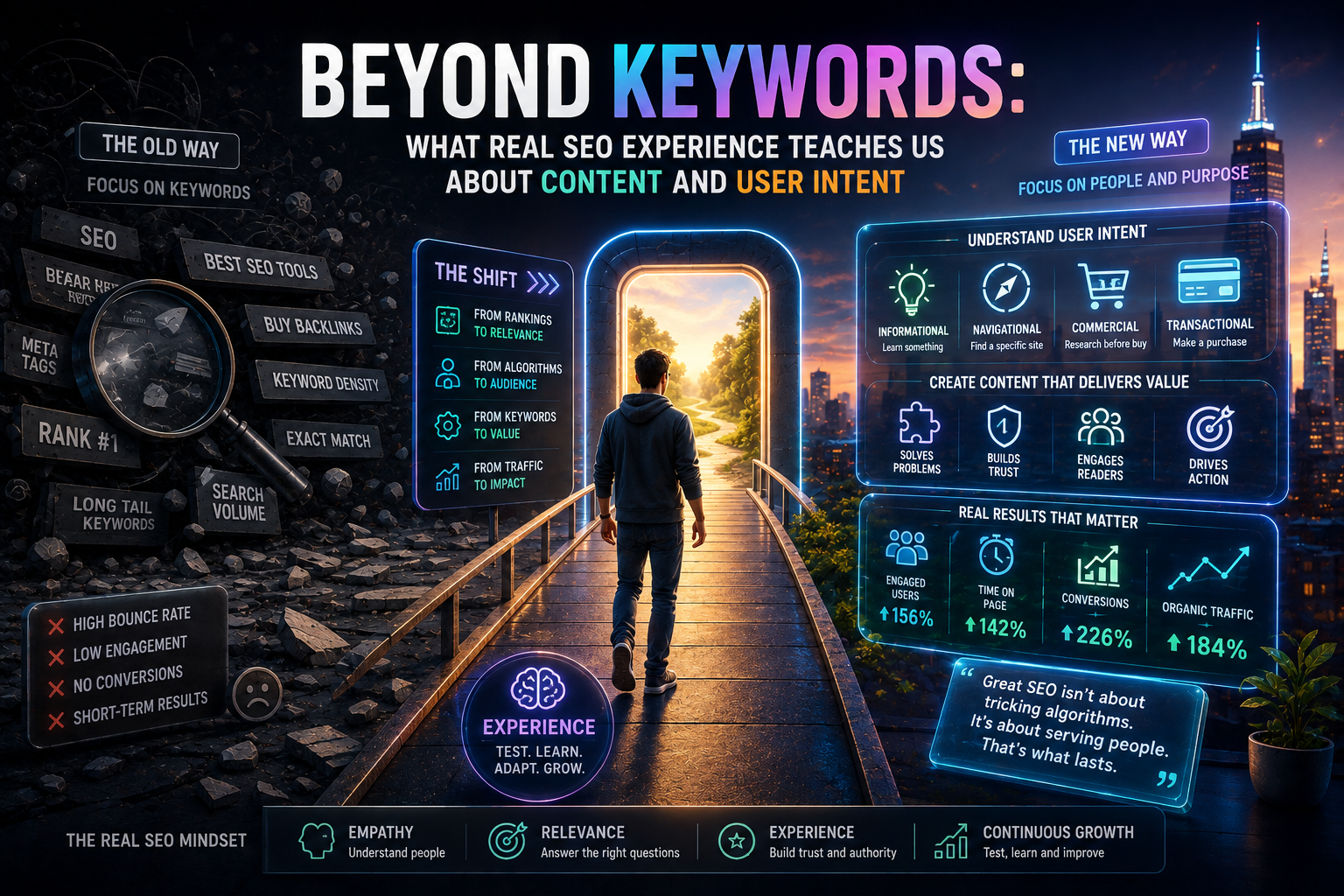
Generally, users may be looking for information, trying to navigate to a particular website, comparing products or services, or preparing to make a purchase.
Understanding intent changes how an article should be written.
If someone searches for “how to improve website speed,” they probably want practical instructions. A page that only defines website speed without explaining how to improve it may not satisfy them.
Similarly, someone searching for “best accounting software for small business” may expect comparisons, features, pricing considerations, and practical recommendations.
The content needs to match the purpose of the query.
Good Content Starts With Questions
One of the most useful changes in my SEO approach was beginning with questions instead of keywords.
Before writing an article, I ask:
What problem is the reader trying to solve?
What information do they already know?
What information are they likely missing?
What would make the page genuinely useful?
These questions often produce better content outlines than keyword lists alone.
Instead of writing an article simply because a phrase has search volume, I can build a resource around the actual needs of the audience.
Relevance Is More Important Than Repetition
An article does not become more relevant simply because a keyword appears dozens of times.
Excessive repetition can make writing unnatural and uncomfortable to read.
A better approach is to cover the topic comprehensively using related concepts, examples, questions, and useful explanations.
For example, an article about website hosting might naturally discuss servers, uptime, bandwidth, security, backups, scalability, and performance.
These concepts help explain the subject without forcing the same keyword into every paragraph.
Content Quality Is About Usefulness
There is no single word count that guarantees quality.
Some topics require detailed guides, while others can be answered effectively in a few paragraphs.
The real question is whether the content satisfies the reader.
A high-quality page should be clear, organized, accurate, and easy to understand. It should provide enough information to help the visitor move forward.
Sometimes that means a comprehensive guide. Other times, it means a simple and direct answer.
User Experience Supports Content
Even excellent information can be difficult to use if the page itself is frustrating.
Large blocks of text, confusing navigation, slow loading pages, intrusive pop-ups, or excessive advertising can discourage visitors.
Content should therefore be designed for readability.
Use descriptive headings, short paragraphs, lists where appropriate, useful internal links, and clear navigation.
The goal is to help readers find information rather than make them work for it.
Internal Links Can Reflect User Intent
Internal linking is another area where user intent can guide SEO decisions.
Instead of adding links simply to increase the number of internal links, consider what the reader might want to know next.
An introductory article about SEO could link to a detailed guide about keyword research. A keyword research article could then link to resources about search intent and content planning.
This creates a natural journey through the website.
Readers get additional information, while the site’s content becomes more connected.
Learning From Real Users
Analytics can reveal valuable clues about whether content is meeting expectations.
If visitors frequently leave a page quickly, it may be worth reviewing whether the introduction answers their question clearly. If users consistently visit another related article, that topic might deserve additional coverage.
Search performance data can also reveal unexpected queries that bring visitors to a page.
These signals can inspire new content ideas and improvements.
The important thing is not to treat every metric as a direct ranking signal. Instead, use data to understand how people interact with the website.
SEO Is Becoming More Human-Centered
The biggest lesson from real-world SEO is that optimization works best when it starts with people.
Search technology continues to become better at understanding language, context, and relationships between concepts. That makes it increasingly important to create content that communicates clearly rather than content designed around mechanical keyword placement.
This does not mean abandoning keywords. It means using them more intelligently.
Keywords can help identify opportunities, while user intent determines what those opportunities should become.
Final Thoughts
SEO experience teaches us that successful content goes beyond keywords.
Research can tell you what people search for, but understanding user intent helps you determine what they actually need.
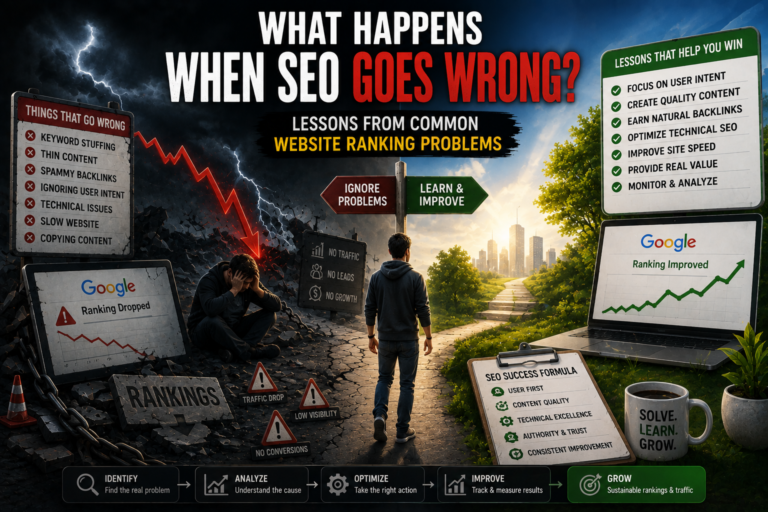
Create content that answers real questions. Provide useful explanations. Organize information logically. Make pages easy to navigate and read. Use internal links to guide visitors toward relevant resources.
The strongest SEO strategy is not about repeating a phrase as many times as possible.
It is about understanding the person behind the search and creating a page that genuinely helps them.
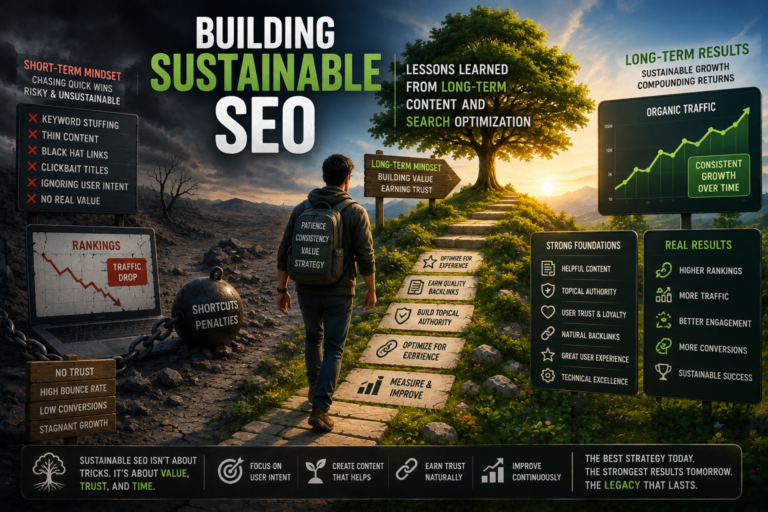
When content serves users first, SEO becomes less about chasing algorithms and more about building a website that deserves to be found.
About the Author