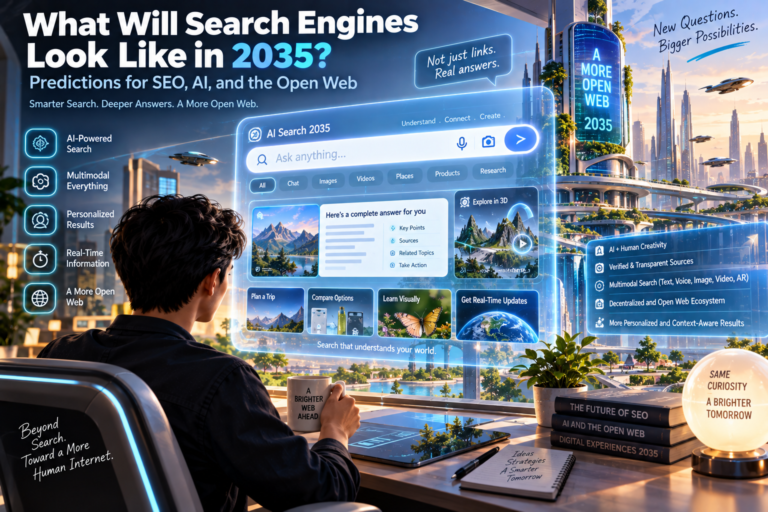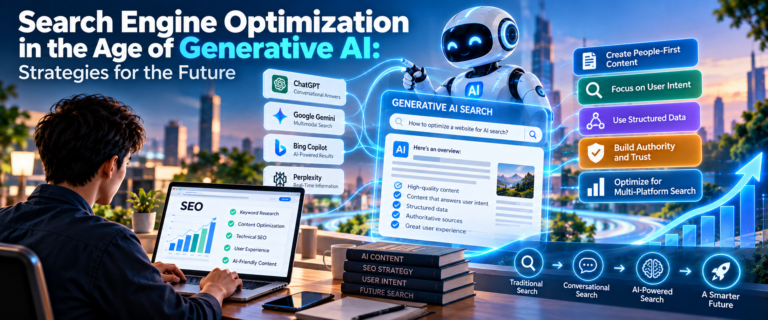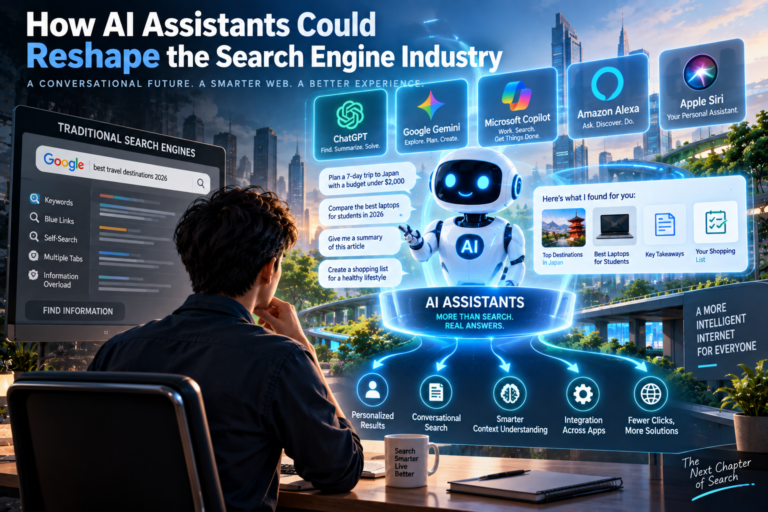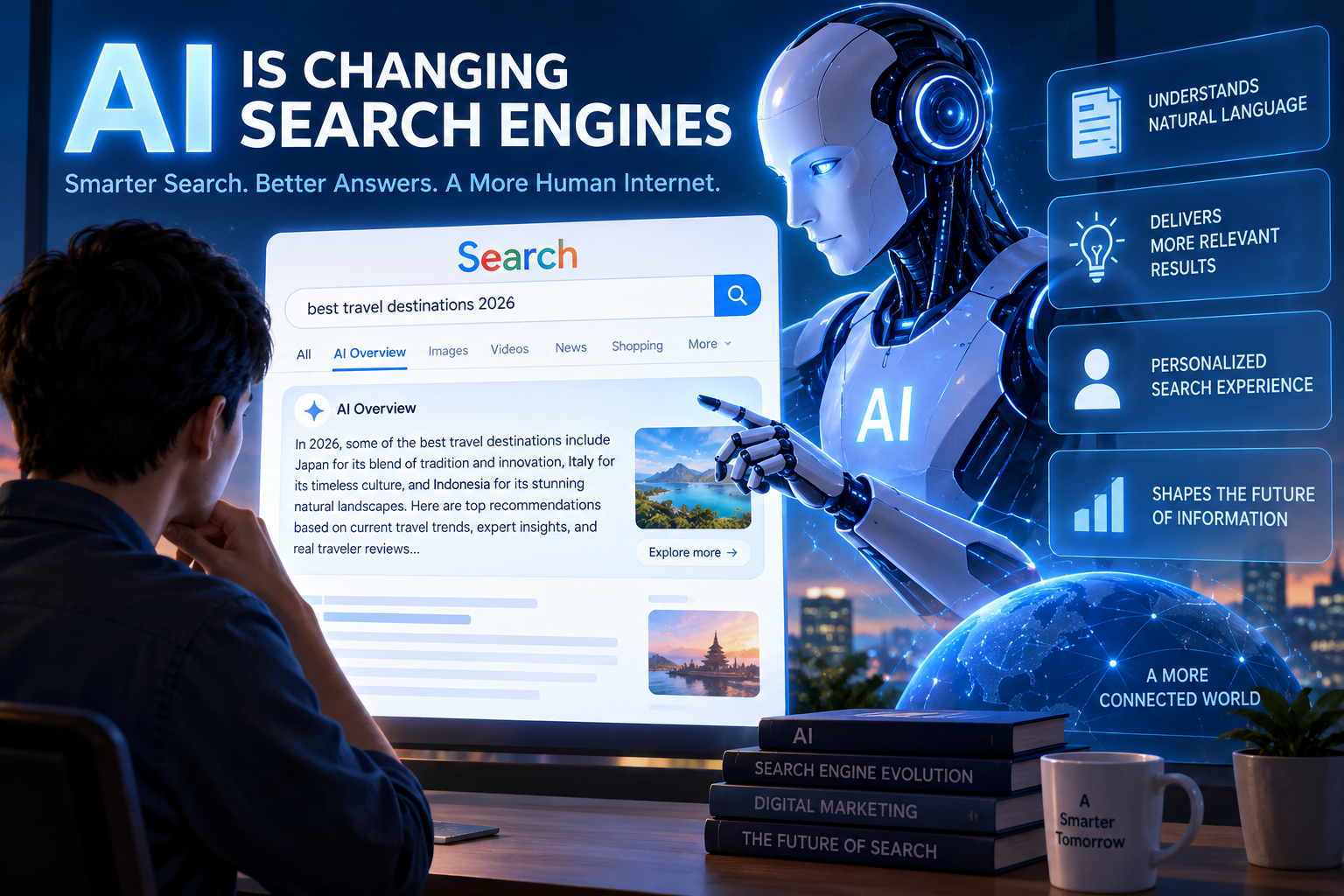
Search engines have changed dramatically since the early days of the internet. In the past, finding information online often required users to type specific keywords and browse through multiple websites before discovering the answer they needed. Today, search engines are becoming more intelligent, conversational, and personalized. Artificial intelligence is playing an important role in this transformation, and the way people search for information may continue to evolve significantly over the next decade.
From Keywords to Conversations
Traditional search engines were largely built around keywords. A user entered a phrase, and the search engine attempted to identify web pages that were relevant to those words.
Modern search technology is increasingly focused on understanding meaning rather than simply matching words.
For example, someone searching for “best way to reduce electricity costs at home” is probably not interested in pages that simply repeat that phrase. The person wants practical recommendations.
AI systems can analyze context, relationships between concepts, and user intent. This allows search experiences to become more conversational.
Instead of performing several separate searches, users may increasingly ask follow-up questions such as:
“What about apartments?”
“Which option is cheapest?”
“How much could I save each year?”
The search system can potentially understand that these questions are connected to the original conversation.
Search Results May Become Direct Answers
One of the biggest changes in search is the growing importance of direct answers.
Traditionally, a search engine displayed a list of links and expected users to visit websites to find information. AI-powered search systems can instead summarize information and present an answer directly within the search interface.
This creates both opportunities and challenges for publishers.
Users may receive answers faster, but websites may need to provide greater value to encourage people to visit them.
Original research, detailed tutorials, interactive tools, expert explanations, personal experience, and unique data could become increasingly important.
Search Could Become More Multimodal
Future search engines may not depend primarily on text.
Users can already search using images, voice, and other forms of input. These capabilities are likely to become more sophisticated.
Imagine photographing a damaged plant and asking:
“Why are these leaves turning brown?”
A future search system could analyze the photograph, identify the plant, consider possible causes, and suggest useful resources.
Similar technology could help people identify products, landmarks, animals, equipment, documents, and many other objects.
This means publishers may eventually optimize more than written articles. Images, videos, structured information, diagrams, and audio could all become valuable search assets.
Personalization Could Become More Advanced
Search results have long been influenced by factors such as location, language, and previous activity. AI could make personalization significantly more sophisticated.
A beginner researching web hosting, for example, may benefit from a simple explanation of domains, servers, and hosting plans. An experienced developer searching for the same subject may prefer technical benchmarks and configuration information.
Search engines could become better at adapting information to different levels of knowledge and different contexts.
However, greater personalization also creates important questions about privacy and transparency. Search providers will need to balance useful personalization with responsible data practices.
Trust Will Become Increasingly Important
The internet contains an enormous amount of information, and generative AI makes creating content easier than ever.
As the volume of online material grows, identifying reliable information becomes more important.
Search systems may therefore place increasing emphasis on signals related to credibility, originality, authorship, sources, reputation, and first-hand experience.
For website owners, this suggests that publishing large quantities of generic material may become less effective than creating genuinely useful resources.
A strong article should answer the reader’s question clearly while providing something that is difficult to obtain from a generic summary.
What Website Owners Can Do
Nobody can predict exactly what search engines will look like ten years from now. However, several principles are likely to remain valuable.
Website owners can focus on understanding their audience, answering real questions, building topical expertise, improving technical performance, and publishing original information.
It is also useful to diversify traffic sources. Search engines can remain important while newsletters, social communities, direct visitors, video platforms, and other channels help publishers avoid depending entirely on one source.
Conclusion
Artificial intelligence is unlikely to eliminate the need to find information. Instead, it is changing how information is discovered, interpreted, and presented.
Search may gradually move from a system based primarily on lists of links toward an intelligent discovery environment that combines answers, websites, images, videos, tools, and conversations.
For publishers, the future of search is therefore not simply about ranking for more keywords. It is about becoming a useful and trustworthy source of information that both people and intelligent search systems can understand.
About the Author