words, backlinks, and search rankings. I assumed that if I published enough articles and optimized them properly, traffic would naturally follow.
It did not take long to discover that SEO is much more complicated.
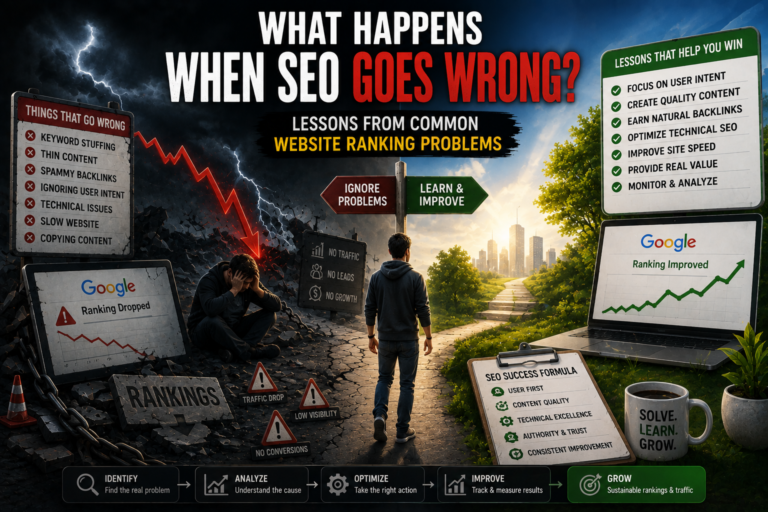
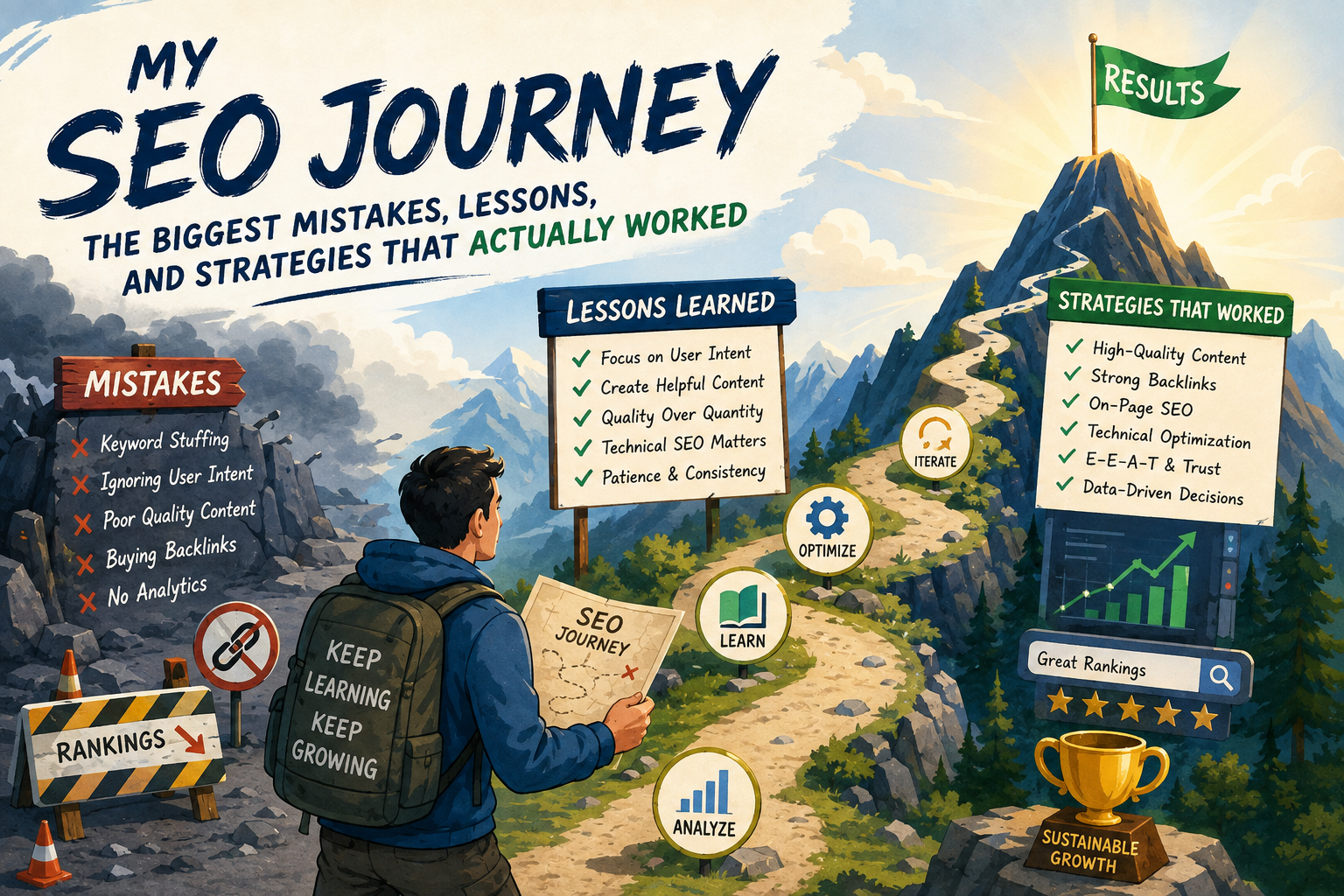
Over time, mistakes became some of the most valuable teachers. Experiments that failed helped reveal what mattered, while small improvements eventually produced meaningful results. Here are some of the biggest lessons from my SEO journey and the strategies that proved most useful.
My Biggest SEO Mistake: Focusing Too Much on Keywords
One of my earliest mistakes was believing that keywords were the center of everything.
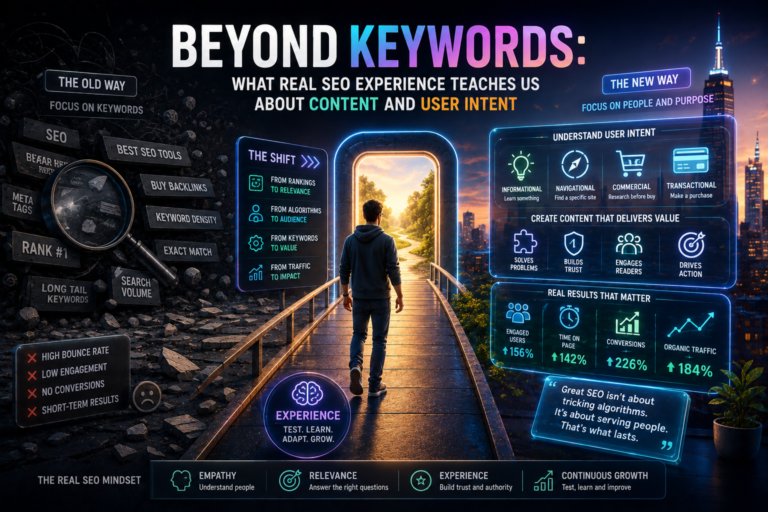
I spent considerable time finding keywords and making sure they appeared in titles, headings, paragraphs, and metadata. While keyword research is still important, I eventually realized that a page can be perfectly optimized for a keyword and still fail to satisfy the person searching for it.
Search intent matters.
A person searching for “best website hosting” may want comparisons and recommendations, while someone searching for “how does web hosting work” probably needs an educational explanation. These are completely different needs.
Once I started creating content based on search intent instead of keyword frequency, the quality of my articles improved significantly.
Publishing More Content Was Not Always Better
Another lesson came from publishing too many articles without a clear content strategy.
At first, quantity felt productive. More articles meant more keywords, more indexed pages, and potentially more traffic. However, a large collection of unrelated or shallow articles can make a website difficult to manage and less useful to visitors.
I learned to focus on topical relevance.
Instead of publishing random subjects, I began creating groups of related articles. A central guide could explain a broad topic, while supporting articles covered specific questions in greater detail.
This approach created a more organized website and made it easier to build meaningful internal links.
Ignoring Older Content Was a Missed Opportunity
For a long time, I treated published articles as finished projects.
Once an article was online, I moved on to the next one. Eventually, I realized that older content can be one of the most valuable resources on a website.
Information changes. Search intent evolves. Competitors publish better content. Some articles naturally lose visibility.
Updating older pages became part of my SEO routine. I started improving outdated information, adding useful sections, correcting errors, improving headings, strengthening internal links, and making articles easier to read.
Sometimes, improving an existing page produced better results than creating another new article.
Technical SEO Matters More Than I Expected
Content may be the foundation of a website, but technical problems can prevent that content from performing well.
I learned to pay closer attention to page speed, mobile usability, broken links, indexing issues, redirects, duplicate pages, and website structure.
Technical SEO does not mean every website needs an extremely complicated setup. Basic cleanliness can go a long way.
A logical URL structure, accessible navigation, responsive design, fast pages, and properly indexed content create a stronger foundation for everything else.
The Strategy That Worked: Creating Useful Content
The most reliable strategy I discovered was also one of the simplest: create genuinely useful content.
Instead of asking, “How can I make this page rank?” I started asking, “What would make this page the most helpful result for the reader?”
That small change influenced everything from article structure to examples and explanations.
Useful content does not necessarily have to be extremely long. It needs to be relevant, accurate, understandable, and complete enough to satisfy the reader’s purpose.
Internal Linking Became a Powerful Habit
Internal linking was another strategy that became increasingly important.
When related articles were connected naturally, visitors could discover more information without returning to the search engine. Internal links also helped create a clearer relationship between different pages.
The key word is “naturally.” Links should help the reader, not simply exist because an SEO checklist says they should.
A detailed guide can link to supporting articles, while supporting articles can link back to the broader topic. This creates a useful content ecosystem.
I Stopped Obsessing Over Rankings
Perhaps the biggest mindset change was learning not to judge everything by rankings.
Search positions can fluctuate for many reasons. A page can move up one week and down the next without a major change to the website.
Instead of checking rankings constantly, I began paying attention to broader indicators such as organic traffic, relevant visitors, engagement, conversions, and which topics generated the most interest.
This provided a much more realistic picture of whether SEO efforts were actually helping.
Patience Became Part of the Strategy
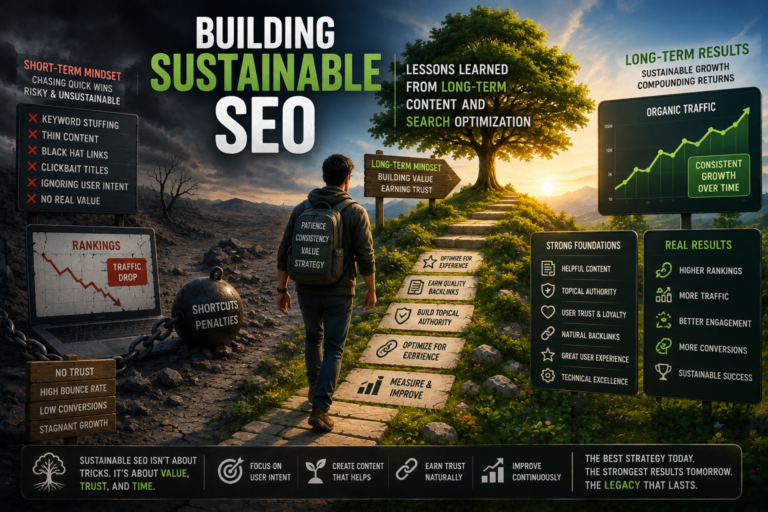
SEO taught me that patience is not optional.
Some improvements produce results quickly, while others take months. A new website may need considerable time to build authority and establish a reliable stream of organic traffic.
The mistake is assuming that a lack of immediate results means the strategy is failing.
Good SEO is often the result of many small improvements accumulated over time.
Final Thoughts
My SEO journey has included plenty of mistakes, experiments, unexpected results, and lessons. The biggest realization is that successful SEO is not about discovering one secret trick.
It is about building a better website.
Understand what people are searching for. Create content that genuinely helps them. Keep the technical foundation healthy. Connect related information logically. Review old content. Measure meaningful results. Most importantly, stay consistent.
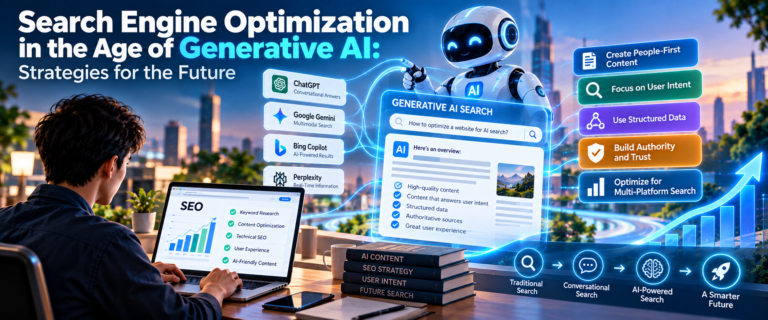
Search engines will continue to change, but websites that prioritize usefulness, clarity, and real value have a much stronger chance of remaining relevant for the long term.
About the Author