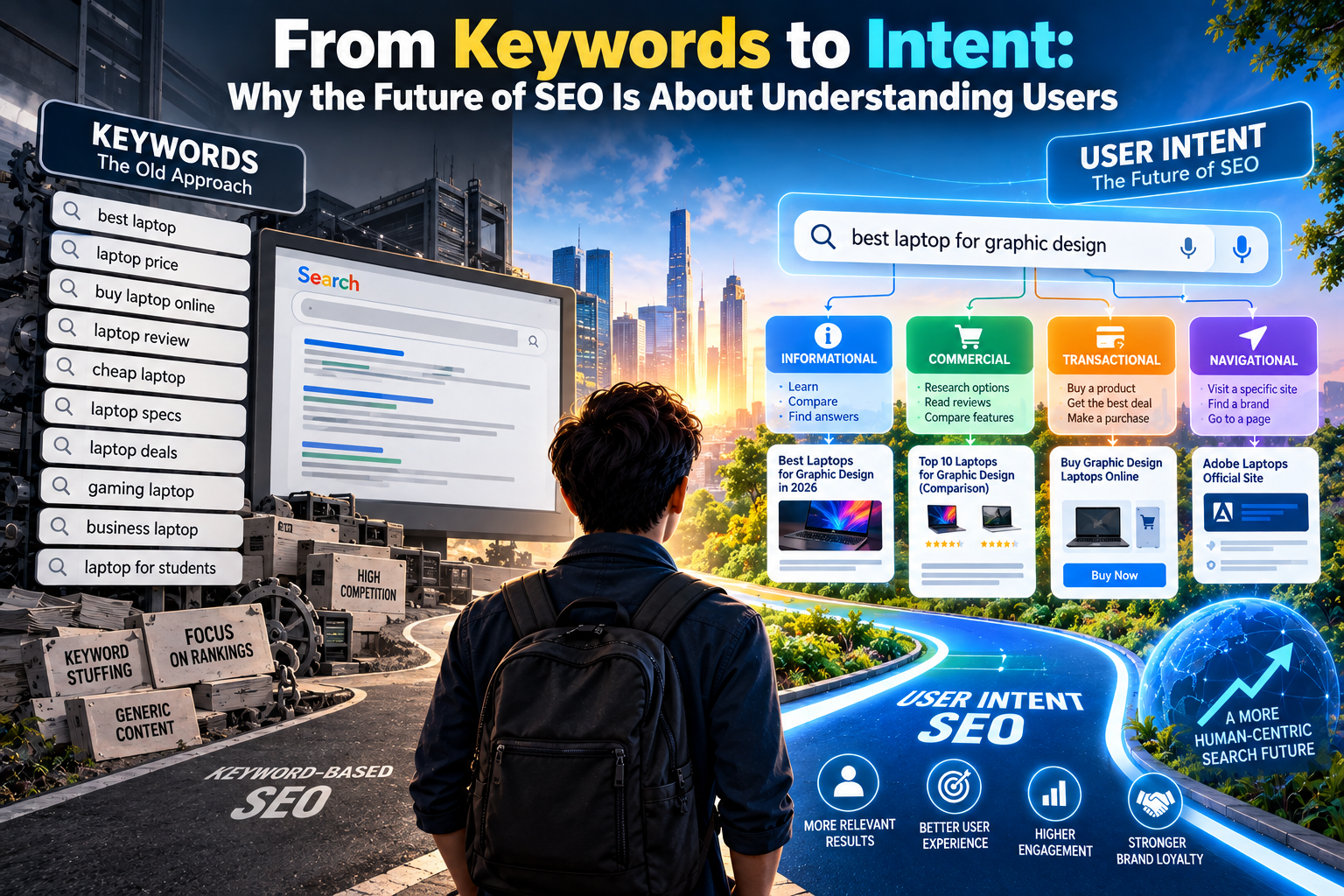
SEO was once heavily associated with keywords. Website owners identified popular search phrases and attempted to place those phrases strategically throughout their pages.
Modern search is more sophisticated.
Search engines increasingly attempt to understand what users actually want rather than simply identifying pages containing matching words.
This shift from keywords toward search intent could become one of the defining characteristics of future SEO.
What Is Search Intent?
Search intent describes the purpose behind a search.
Consider someone searching for “cloud hosting.”
That short phrase provides relatively little information about the person’s actual objective.
The user might want to understand what cloud hosting is, compare providers, find pricing information, learn how to migrate a website, or purchase a hosting plan.
The words may be identical while the objectives are completely different.
Effective SEO therefore requires understanding both the query and the problem behind it.
Four Common Types of Search Intent
Search intent is frequently divided into broad categories.
Informational searches involve learning something. Navigational searches involve finding a specific website or page. Commercial research involves comparing options before making a decision. Transactional searches involve completing an action such as purchasing or registering.
These categories are useful, but real searches can be more complicated.
A single search journey may move through several types of intent.
Someone might begin by asking what VPS hosting is, later compare VPS providers, and eventually search for a specific hosting company’s pricing page.
Understanding this journey can help publishers create connected content.
Why AI Makes Intent More Important
Conversational AI gives users greater freedom to describe exactly what they need.
Instead of typing:
“cheap laptop”
someone might ask:
“I need an affordable laptop for university that is lightweight, has good battery life, and can handle basic video editing.”
This query provides much richer intent signals.
As conversational searches become more common, SEO strategies based exclusively on short keywords may become increasingly limited.
Publishers will need to understand questions, situations, problems, and decision-making processes.
Build Topic-Based Content
One practical response is to organize content around topics rather than isolated keywords.
A website about gardening could build a comprehensive section about growing tomatoes.
The main guide might explain planting, soil, sunlight, watering, and harvesting. Supporting articles could discuss common diseases, container gardening, fertilizer, pruning, and regional growing conditions.
Internal links could connect these resources logically.
This structure helps readers explore the subject while making the relationship between pages clearer.
Write for People First
Understanding intent encourages natural writing.
If the objective is genuinely helping someone solve a problem, there is little reason to repeat an exact keyword unnaturally.
Instead, writers can explain the subject clearly, answer related questions, provide examples, and anticipate what readers may need next.
Good SEO and good user experience increasingly overlap.
A page that quickly answers the primary question while providing useful depth is more valuable than a page created primarily to satisfy a keyword density formula.
Measure Satisfaction, Not Just Rankings
Rankings are useful SEO metrics, but they do not tell the complete story.
A page could rank well while failing to help visitors.
Publishers can also examine engagement, conversions, returning visitors, newsletter subscriptions, customer questions, and other indicators relevant to the website’s purpose.
The central question should be whether visitors accomplished what they came to do.
Conclusion
Keywords are not disappearing. People will continue using words to communicate with search systems.
However, the meaning behind those words is becoming increasingly important.
Future SEO strategies should therefore begin with people rather than search volume.
Understanding what users want, why they search, what questions follow, and what information helps them make decisions can lead to stronger content.
The future of SEO may ultimately be less about optimizing for individual keywords and more about becoming the best possible resource for a particular need.
About the Author