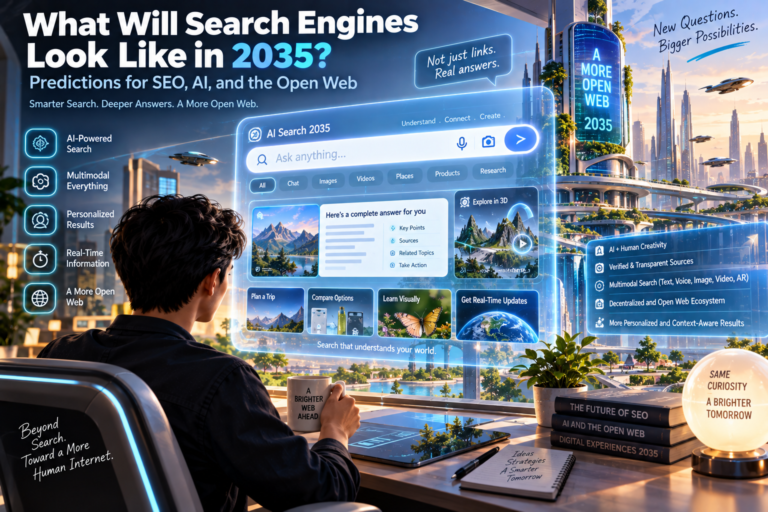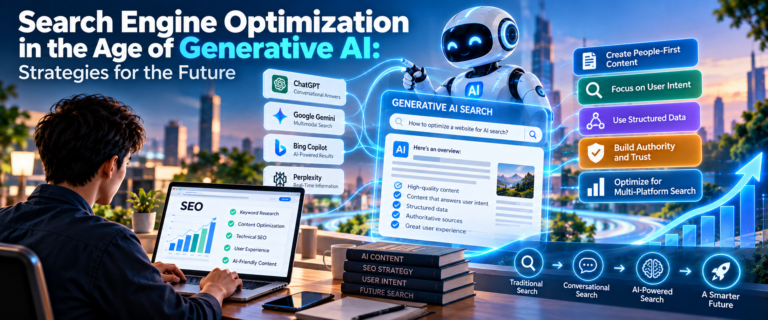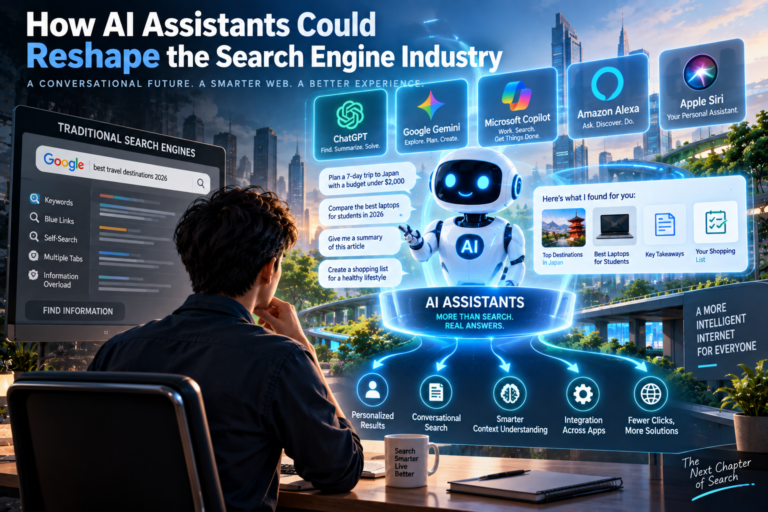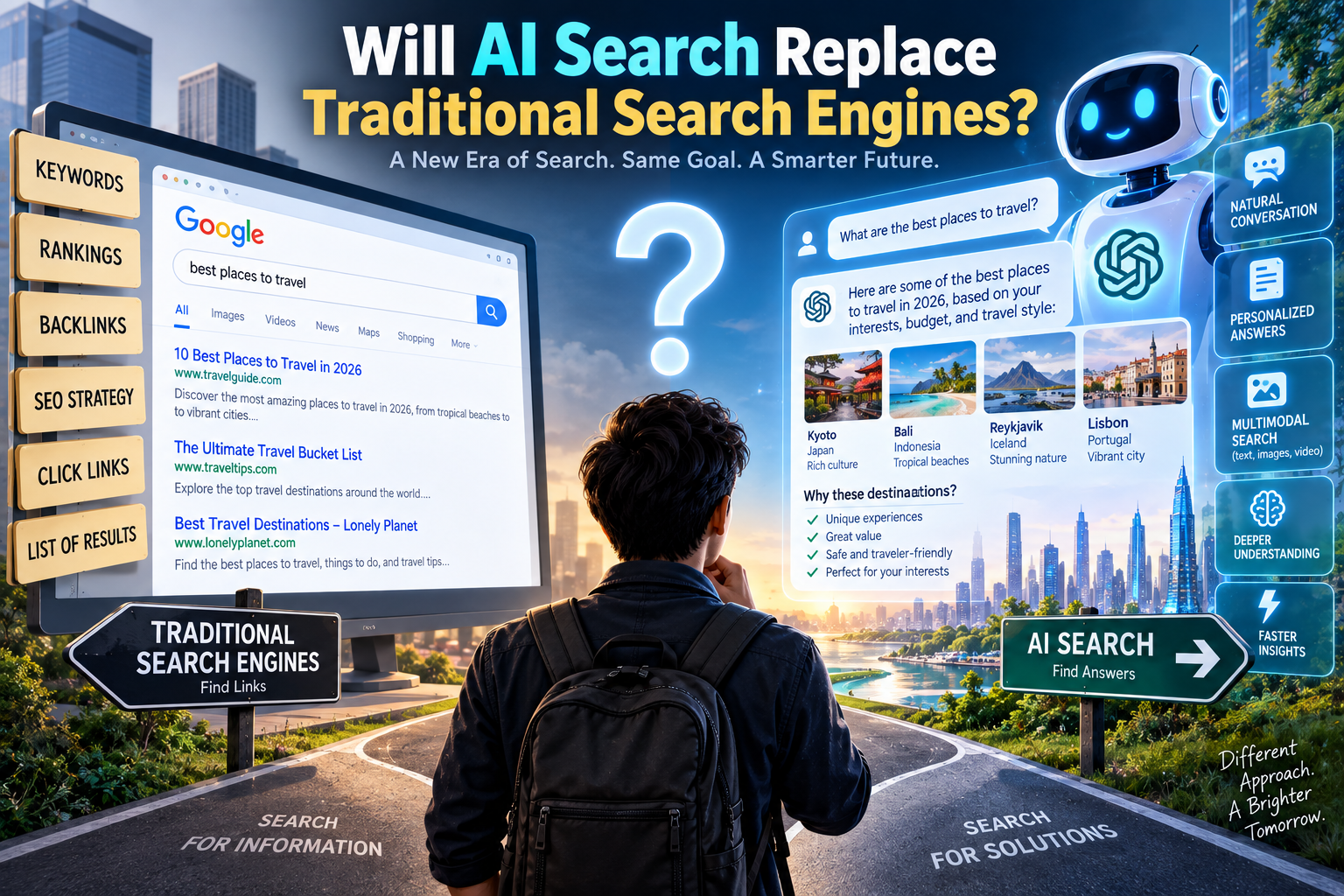
For decades, online search has followed a familiar pattern: enter a query, receive a list of results, and visit one or more websites.
Artificial intelligence is beginning to challenge that model.
AI-powered search experiences can answer complex questions, summarize information, maintain conversations, and help users refine their requests without requiring a new search every time.
Does this mean traditional search engines will disappear?
Probably not in the simple sense of one technology completely replacing another. A more plausible future is one in which traditional search and AI-assisted discovery increasingly merge.
Why AI Search Is Attractive
Traditional search can require significant effort.
If someone wants to compare different approaches to starting a vegetable garden, that person might visit numerous pages, collect information, compare recommendations, and create a plan.
An AI search system can potentially perform some of that organizational work.
Users can ask complex questions containing multiple requirements and receive a structured response. They can then ask follow-up questions without repeating the entire query.
This convenience is one reason conversational search is becoming important.
Traditional Search Still Has Important Advantages
Direct AI answers are not ideal for every situation.
People searching for a particular website, shopping for products, researching controversial subjects, reading original reporting, or looking for detailed technical documentation may still want access to primary sources.
Traditional search results provide users with multiple perspectives and allow them to decide which sources to explore.
The open web also contains enormous amounts of constantly changing information that cannot always be adequately represented by a short generated answer.
For these reasons, links are unlikely to become irrelevant.
Search Engines Could Become Hybrid Systems
Instead of AI replacing search engines, search engines may increasingly combine multiple formats.
A future results page could contain an AI-generated overview, traditional website links, videos, images, maps, products, community discussions, and interactive tools.
The exact combination could depend on the query.
A simple factual question might receive a concise answer, while a complicated purchasing decision could generate comparisons and links to additional sources.
Search may therefore become more dynamic rather than disappearing.
The Challenge for Publishers
This evolution creates an obvious concern for website owners.
If users receive sufficient information directly from a search interface, they may have less reason to visit the source website.
This phenomenon is often associated with zero-click searches.
Publishers can respond by creating resources whose value extends beyond a short factual answer.
A mortgage calculator, interactive database, original survey, detailed tutorial, unique photography collection, or first-hand product test cannot always be replaced effectively by a short summary.
Build Content Worth Visiting
Future content strategies may need to distinguish between information that can easily be summarized and information that creates a deeper experience.
Basic definitions will continue to have value, but publishers can strengthen them with examples, original analysis, data, tools, and practical experience.
For example, instead of publishing another generic article about website speed, a publisher could test dozens of websites, document the methodology, publish benchmark data, and provide an optimization checklist.
The resulting resource offers more than an answer. It offers evidence.
Diversify Traffic Sources
Search traffic can be extremely valuable, but dependence on a single discovery platform creates risk.
Website owners can develop direct relationships with audiences through email newsletters, communities, social platforms, podcasts, videos, and other channels.
Building a recognizable brand can also increase direct visits.
When users remember a website and intentionally return to it, algorithm changes become less threatening.
Conclusion
AI search is likely to change traditional search significantly, but replacement is not the only possible outcome.
Search engines themselves are becoming AI-powered, creating a hybrid environment where generated answers and traditional web results coexist.
For website owners, the most important response is not attempting to predict every interface change. It is creating useful resources, building credibility, developing direct audience relationships, and giving people compelling reasons to visit the original website.
About the Author