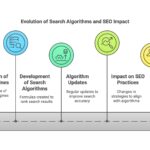

The world of search engine optimization (SEO) has undergone remarkable transformations over the past two decades. From keyword stuffing and backlink manipulation to user-focused content and artificial intelligence-driven search, SEO has continuously evolved alongside technological advancements. As we look toward 2030, the pace of change is expected to accelerate even further.
Artificial intelligence, voice search, augmented reality, personalized experiences, and changing consumer expectations will significantly influence how people discover information online. For businesses, marketers, and website owners, understanding these trends is essential for maintaining visibility in an increasingly competitive digital environment.
While no one can predict the future with complete certainty, several emerging developments provide valuable clues about what SEO may look like by 2030.
The Rise of AI-First Search Experiences
By 2030, artificial intelligence is expected to play a central role in how search engines operate. Today’s AI-powered search features already provide direct answers, summaries, and conversational responses. In the future, these capabilities will likely become even more sophisticated.
Instead of displaying pages of search results, search engines may function as intelligent assistants capable of understanding complex questions, personal preferences, and contextual information.
For example, a user might ask:
“Plan a three-day vacation to Bali for a family of four with a budget of $1,500.”
Rather than providing links to travel websites, the search engine could generate a complete itinerary, hotel recommendations, transportation options, and estimated costs.
As AI becomes more advanced, SEO professionals will need to optimize content not only for search rankings but also for AI-generated responses and recommendations.
Search Will Become More Personalized
Personalization is expected to become a defining feature of future search experiences.
By 2030, search engines may consider numerous factors when delivering results, including:
- Previous search behavior
- Location
- Interests
- Purchase history
- Device usage
- Time of day
- Contextual preferences
Two people searching for the same topic may receive entirely different results based on their individual needs and behaviors.
This shift means that marketers will need to focus more on audience segmentation and user intent rather than relying solely on broad keyword strategies.
Understanding customer needs at a deeper level will become increasingly important for achieving search visibility.
Keywords Will Continue to Lose Importance
Keywords will not disappear entirely, but their influence is likely to diminish as search engines become better at understanding natural language.
In the past, SEO often revolved around finding high-volume keywords and incorporating them into content. By 2030, semantic understanding and contextual relevance will play a much larger role.
Search engines will focus on answering questions rather than matching exact phrases.
For content creators, this means producing comprehensive resources that address entire topics rather than targeting individual keywords.
Successful websites will be those that demonstrate expertise and provide meaningful answers to user questions.
Voice Search Will Become Mainstream
Voice technology continues to improve rapidly, and by 2030, voice-based interactions may represent a significant portion of online searches.
Smart speakers, wearable devices, connected vehicles, and AI assistants are making voice search more convenient than ever.
Voice searches tend to be:
- Longer
- More conversational
- More specific
- Often question-based
For example, instead of typing:
“best restaurants Surabaya”
A user may ask:
“What are the highest-rated family-friendly restaurants near me that are open right now?”
SEO strategies will need to adapt by focusing on conversational content, question-and-answer formats, and natural language optimization.
Visual Search Will Expand Significantly
The future of search is not limited to text and voice. Visual search technologies are expected to become increasingly sophisticated.
Users may simply take a photo of an object and instantly receive:
- Product information
- Pricing details
- Reviews
- Purchase options
- Related recommendations
Retail, fashion, travel, and home improvement industries are particularly likely to benefit from visual search growth.
To remain competitive, businesses will need to optimize images through:
- High-quality visuals
- Descriptive file names
- Alt text
- Structured data
- Image metadata
Visual content will become an even more important component of SEO strategies.
Content Quality Will Matter More Than Ever
As AI-generated content becomes widespread, search engines will place greater emphasis on identifying truly valuable information.
Simply publishing large volumes of articles will not guarantee visibility.
By 2030, successful content will likely demonstrate:
- Original insights
- Real-world experience
- Expert knowledge
- Accurate information
- Unique perspectives
Search engines will continue prioritizing content that offers genuine value rather than content created solely to attract traffic.
Businesses that invest in quality over quantity will have a stronger chance of maintaining long-term visibility.
E-E-A-T Will Become Increasingly Important
Google’s E-E-A-T framework—Experience, Expertise, Authoritativeness, and Trustworthiness—is expected to become even more influential in future search rankings.
As misinformation and AI-generated content continue to grow, trust will become a critical ranking factor.
Websites that demonstrate credibility through:
- Expert authorship
- Reliable sources
- Transparent practices
- Positive reputation
- Consistent accuracy
will likely gain an advantage in both traditional and AI-driven search environments.
Building trust will become a long-term investment rather than a short-term optimization tactic.
User Behavior Will Continue to Change
The next generation of internet users is growing up in a world dominated by mobile devices, social media, and AI-powered tools.
By 2030, users may increasingly discover information through:
- AI assistants
- Social platforms
- Video content
- Voice interfaces
- Augmented reality experiences
Traditional search engines will remain important, but they may become just one of many discovery channels.
Businesses will need a broader digital strategy that extends beyond search rankings alone.
Creating content across multiple platforms and formats will become essential for reaching modern audiences.
Technical SEO Will Still Matter
Despite major changes in search technology, technical SEO will remain a critical foundation.
Search engines will continue relying on technical signals to understand and evaluate websites.
Key areas will likely include:
- Site speed
- Mobile performance
- Security
- Structured data
- Accessibility
- User experience
A technically optimized website helps both users and search engines navigate content effectively.
Even in an AI-driven future, strong technical foundations will remain necessary for online success.
Conclusion
SEO in 2030 will look significantly different from today’s practices, but its core purpose will remain unchanged: helping users find the most relevant and valuable information.
Artificial intelligence, personalization, voice search, visual search, and evolving user behavior will redefine how people interact with digital content. Keywords will become less important than context, expertise, and user intent. At the same time, trust, credibility, and content quality will play an even larger role in determining visibility.
Businesses and marketers who embrace these changes early will be better positioned to succeed in the next generation of search. Rather than focusing solely on rankings, the future of SEO will be about creating meaningful experiences, building authority, and delivering genuine value wherever users choose to search.
As 2030 approaches, adaptability will be the most valuable SEO skill of all.