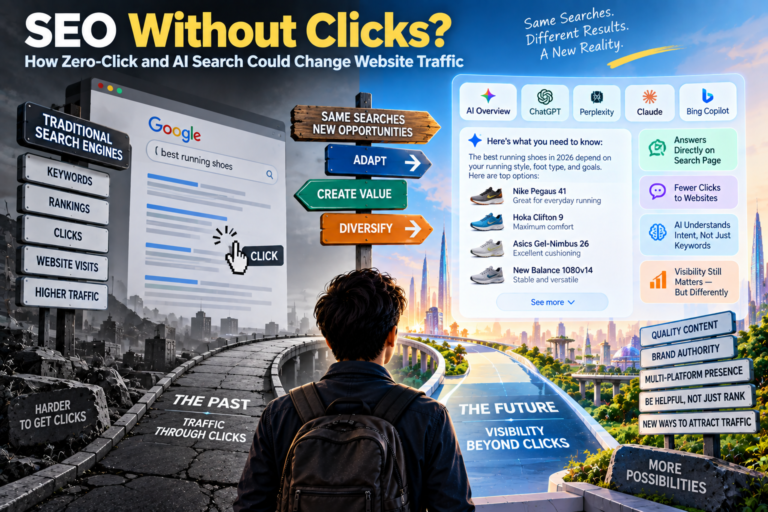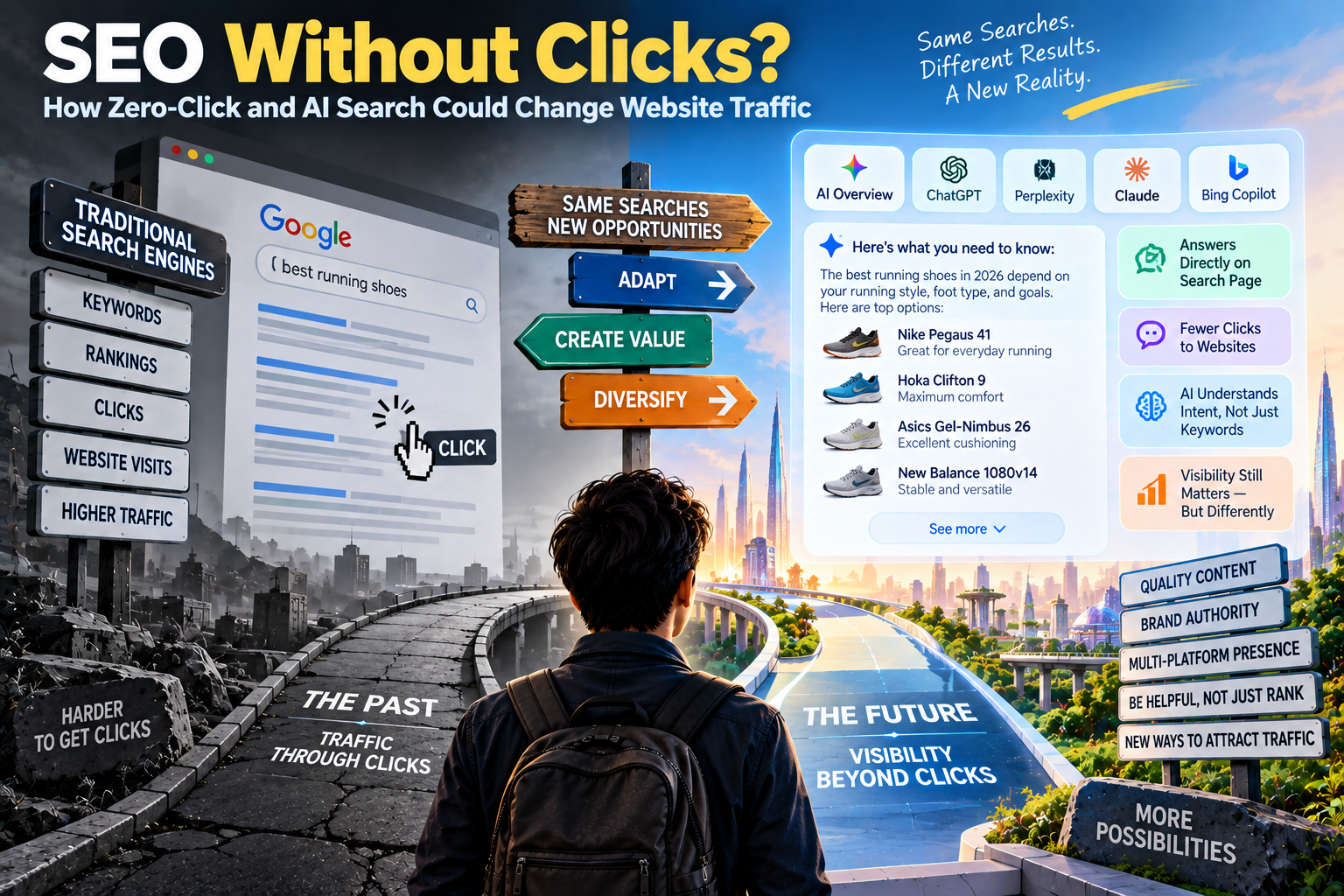
For many website owners, SEO has traditionally had a straightforward objective: rank higher in search results and attract more visitors.
But what happens when users can obtain the information they need without clicking a result?
This question is becoming increasingly relevant as search engines provide direct answers and AI-generated summaries.
The growth of zero-click search could change how businesses measure SEO success.
What Is a Zero-Click Search?
A zero-click search occurs when a user obtains enough information from the search results interface that visiting another website is unnecessary.
This concept existed before generative AI.
Search engines have long displayed weather forecasts, calculations, definitions, sports results, maps, and other information directly.
AI-generated search experiences can potentially expand the range of questions answered without requiring additional navigation.
Not Every Search Needs a Website Visit
From the user’s perspective, direct answers can be convenient.
If someone searches for the current time in another city, forcing that person to visit several websites would create unnecessary friction.
Website publishers therefore need to recognize that some searches naturally have limited click potential.
Creating thousands of pages around questions that can be completely answered in one sentence may become less attractive.
Target Deeper Information Needs
Complex questions create more opportunities.
A user researching how to build an online store may need platform comparisons, examples, pricing considerations, payment information, SEO advice, design guidance, and troubleshooting help.
A short AI summary may provide an overview, but detailed resources can still be valuable.
Publishers can therefore focus more heavily on topics where depth, evidence, or experience matters.
Create Assets That Require Interaction
Interactive content gives people a reason to visit a website.
Examples include calculators, searchable databases, templates, comparison tools, maps, quizzes, generators, and customizable reports.
A financial website might offer a loan calculator.
A travel website could provide an itinerary builder.
A ZIP code website could provide a searchable location database.
These resources perform functions that static informational summaries cannot always reproduce effectively.
Build Content Around Original Experience
First-hand experience can also encourage clicks.
Instead of publishing “10 Tips for Visiting a National Park” based entirely on secondary sources, a writer could document an actual visit with original photographs, transportation details, expenses, mistakes, and practical recommendations.
This type of content has an identifiable perspective.
It also gives readers something beyond a generic answer.
Change How SEO Performance Is Measured
Organic sessions will remain an important metric for many websites, but they may not tell the entire story.
Businesses can also monitor branded searches, conversions, email signups, direct traffic, customer inquiries, sales, downloads, and repeat visitors.
Visibility can have value even when every impression does not produce a click.
However, publishers should connect visibility metrics to meaningful business outcomes rather than assuming exposure automatically creates value.
Build an Audience You Can Reach Directly
One of the strongest responses to uncertain search traffic is audience ownership.
Encourage readers to return through newsletters, useful tools, subscriptions, communities, or regularly updated resources.
A website with loyal repeat visitors is less dependent on continually acquiring new users from search results.
Direct relationships also provide valuable information about what readers actually need.
Conclusion
Zero-click search does not mean SEO has no future.
It means publishers may need to become more selective about what they optimize and how they define success.
Simple factual information will increasingly compete with direct answers. Detailed research, tools, original experience, databases, communities, and trusted brands are harder to replace.
The future of SEO may therefore involve optimizing not simply for clicks, but for meaningful visibility, useful interactions, and long-term audience relationships.
About the Author