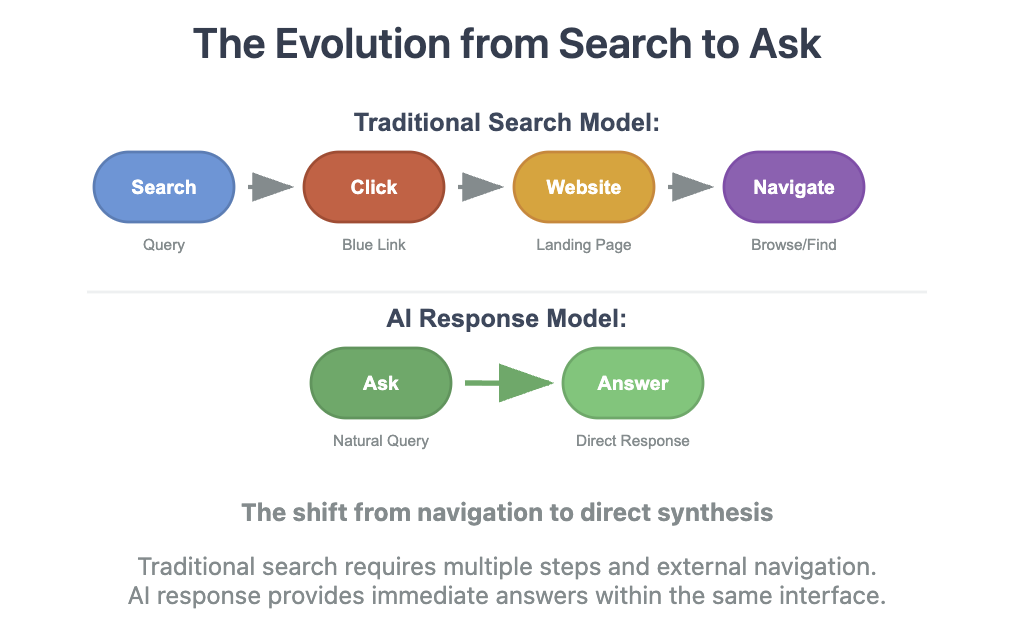
For more than two decades, the familiar format of search engines remained largely unchanged. Users typed a query into a search box and received a page filled with blue hyperlinks pointing to websites that might contain the information they needed. This model, commonly known as the “ten blue links,” became the foundation of how people discovered content online.
The ten blue links approach helped build the modern internet, driving traffic to businesses, publishers, bloggers, and online communities around the world. Search Engine Optimization (SEO) emerged as a critical marketing discipline because ranking among those links often determined whether a website succeeded or failed.
Today, however, the search landscape is undergoing one of the most dramatic transformations in its history. Artificial intelligence, conversational search, voice assistants, visual search technologies, and personalized experiences are gradually replacing the traditional list of links. The question facing businesses and marketers is no longer whether search is changing, but what comes next after the era of ten blue links.
How Search Reached This Point
When search engines first became popular, their primary purpose was simple: help users navigate the growing web. Search algorithms matched keywords with indexed web pages and displayed results based on relevance.
As search technology improved, ranking factors became more sophisticated. Search engines began evaluating:
- Content quality
- Backlinks
- Website authority
- User experience
- Page speed
- Mobile optimization
Despite these advancements, the core user experience remained relatively consistent. Users still received a list of links and chose which pages to visit.
For years, this model worked effectively because it gave users control over where they obtained information.
However, the explosion of online content created new challenges. Users wanted faster answers, more personalized experiences, and less time spent navigating multiple websites.
The Rise of AI-Powered Search
Artificial intelligence is accelerating the evolution of search.
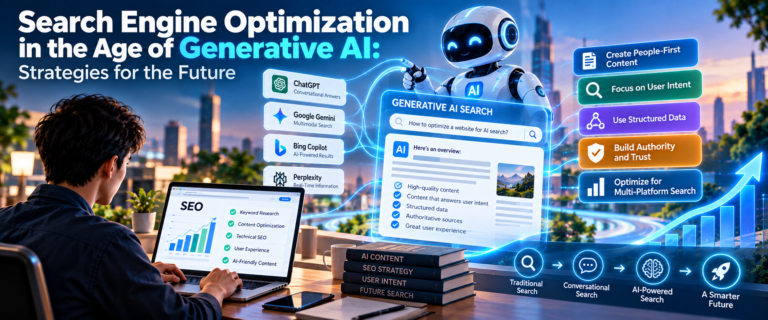
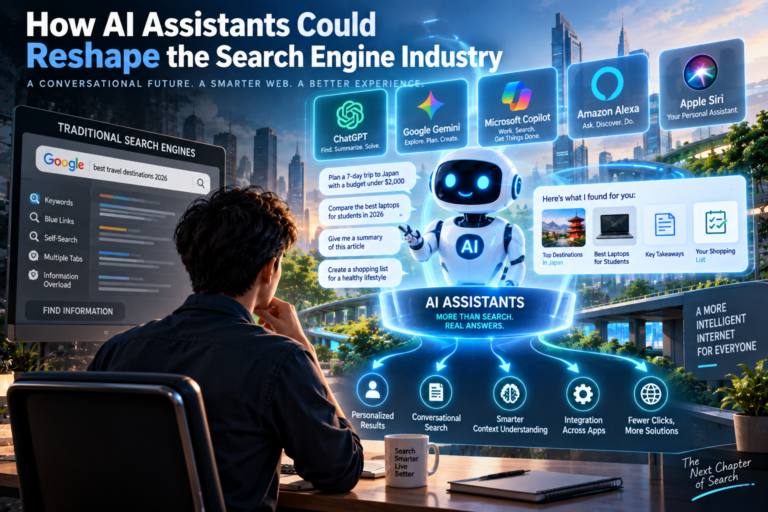
Modern AI systems can understand natural language, analyze context, and generate human-like responses. Instead of simply directing users to information, AI can often provide the information itself.
For example, rather than searching:
“How can I improve my website’s SEO?”
and browsing several articles, users may now receive an AI-generated summary containing practical recommendations and explanations.
This shift fundamentally changes the role of search engines.
Search platforms are evolving from information directories into intelligent answer providers.
The focus is moving away from links and toward direct solutions.
Why Users Prefer Answers Over Links
One of the primary reasons AI-powered search is gaining popularity is convenience.
Most users are not searching for links. They are searching for answers.
When someone asks:
- “How do I remove a coffee stain from carpet?”
- “What is the best laptop for students?”
- “How much protein should I eat daily?”
they typically want immediate guidance rather than a list of websites to evaluate.
AI-powered search experiences reduce friction by delivering concise, relevant information quickly.
As user expectations evolve, search platforms are responding by prioritizing efficiency and personalization.
The Growth of Zero-Click Search
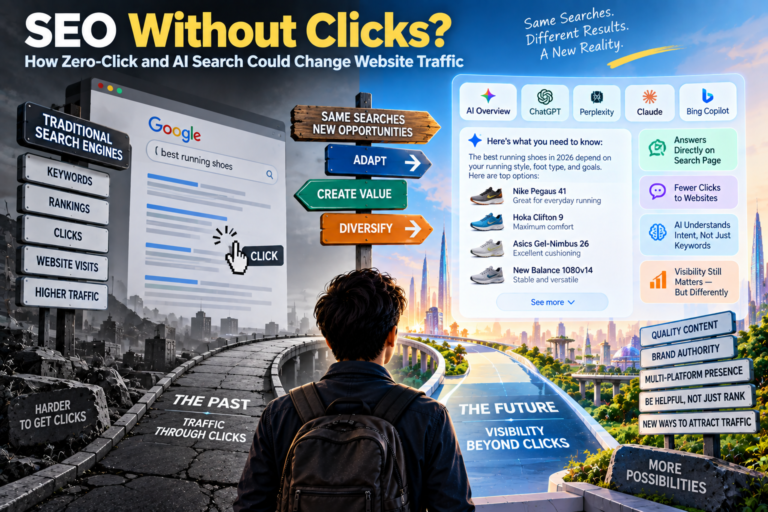
A major consequence of this shift is the rise of zero-click searches.
A zero-click search occurs when users receive the information they need directly within search results without visiting another website.
Examples include:
- Weather forecasts
- Definitions
- Currency conversions
- Sports scores
- Business information
- AI-generated summaries
As AI becomes more capable, the number of searches resolved without clicks is expected to increase.
For businesses that depend heavily on organic traffic, this trend presents both challenges and opportunities.
Visibility is no longer measured solely by website visits.
Search Is Becoming Conversational
Another significant change is the movement toward conversational search.
Traditional search behavior often involved short keyword phrases such as:
- Best smartphones
- SEO tips
- Healthy recipes
Today, users increasingly ask complete questions:
“What is the best smartphone for photography under $800?”
“How can a small business improve its local SEO?”
AI-powered systems can understand these detailed queries and provide highly relevant responses.
Search is beginning to resemble a conversation rather than a series of isolated keyword searches.
This transformation is influencing how content is created and optimized.
Visual and Multimodal Search Are Expanding
The future of search extends beyond text.
Visual search technologies allow users to search using images rather than words. A person can photograph an object and instantly receive information about:
- Products
- Landmarks
- Plants
- Clothing
- Consumer goods
At the same time, multimodal search combines text, images, voice, and video into a single search experience.
Users may soon interact with search engines through a combination of:
- Spoken questions
- Uploaded images
- Text prompts
- Contextual information
These developments create entirely new opportunities for businesses to connect with audiences.
What This Means for SEO
The decline of ten blue links does not mean the end of SEO.
Instead, SEO is evolving.
Search engines still require high-quality content to generate answers and recommendations. Websites remain the primary source of information that powers AI systems.
However, modern SEO increasingly focuses on:
User Intent
Understanding what users actually want rather than simply targeting keywords.
Content Quality
Providing accurate, comprehensive, and valuable information.
Topical Authority
Demonstrating expertise across an entire subject area.
Structured Content
Organizing information so search engines and AI systems can interpret it effectively.
Brand Recognition
Building trust and credibility that extend beyond search rankings.
Success now depends on becoming a trusted source rather than simply achieving a high ranking position.
The Growing Importance of E-E-A-T
As search engines become more reliant on AI-generated responses, trust becomes increasingly important.
Google’s E-E-A-T framework emphasizes:
- Experience
- Expertise
- Authoritativeness
- Trustworthiness
These signals help search systems determine which sources deserve visibility.
Businesses that consistently publish reliable and accurate information are more likely to benefit from future search developments.
Trust may become even more valuable than traditional ranking signals.
Building Visibility Beyond Search Engines
The future of digital discovery is becoming more diverse.
Users increasingly find information through:
- Social media platforms
- Video-sharing websites
- AI assistants
- Online communities
- Podcasts
- Email newsletters
Businesses should avoid relying exclusively on traditional search traffic.
Developing multiple audience channels creates greater resilience and long-term growth opportunities.
A strong brand presence across various platforms helps maintain visibility regardless of how search evolves.
What Comes Next?
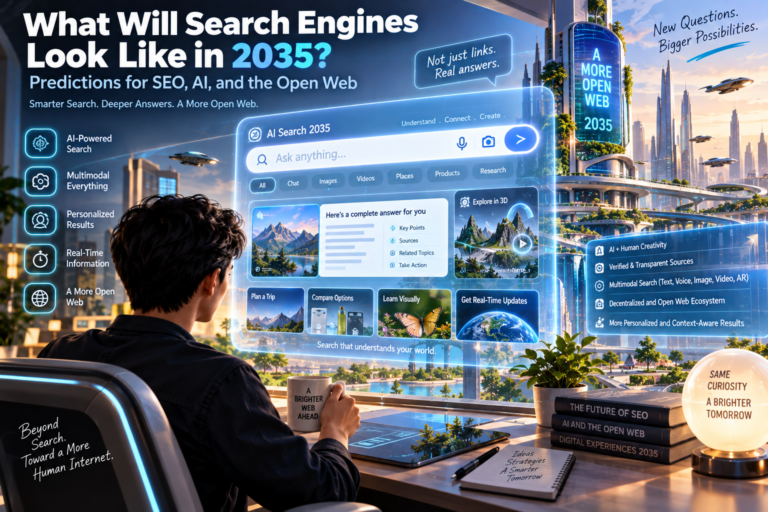
The next generation of search is likely to be defined by intelligent, personalized, and interactive experiences.
Future search platforms may:
- Anticipate user needs
- Provide tailored recommendations
- Understand complex context
- Deliver proactive assistance
- Integrate multiple content formats
Rather than displaying a list of links, search systems may function more like digital advisors that help users make decisions and solve problems.
The shift will not happen overnight, but it is already underway.
Conclusion
The era of ten blue links is gradually coming to an end. While traditional search results remain important, artificial intelligence, conversational interfaces, visual search, and personalized experiences are reshaping how people discover information online.
For businesses, marketers, and content creators, the future of search requires adaptation. Success will depend less on ranking for individual keywords and more on providing trustworthy, high-quality content that addresses user needs. Building authority, understanding search intent, and creating value across multiple platforms will become essential strategies.
The future of search is not simply about finding information—it is about delivering answers, insights, and experiences. Organizations that embrace this evolution will be best positioned to thrive in the next chapter of the digital world.
About the Author